
Diving certificate for children
- Safe learning, community, and experiences underwater
Getting a diving certificate for children is about much more than tanks and fins.
In this guide, we take a closer look at what a diving certificate for children entails—age, safety, learning, and the course—so you can assess whether and when it makes sense for your child.
It's about safety, curiosity, and discovering the world at your own pace. Many children are already fascinated by life beneath the surface long before they take their first breath underwater. They have seen fish on snorkeling trips, followed turtles from the surface, or watched videos and nature programs where a whole new world opens up beneath the sea. The dream of getting down there yourself—really down there—often means more than you might think.
And for children who don't know much about diving beforehand, the fascination often happens the moment they go below the surface of the sea for the first time. When the sounds fade away, movements slow down, and fish swim calmly by, a very special tranquility and immersion arises. Many children become quiet, focused, and deeply absorbed—as if the world suddenly makes sense in a new way.
At our club, we see time and time again how children grow through diving – not just as divers, but as people. They learn to be aware of themselves, to take responsibility, and to be part of a community where everyone looks out for each other. At the same time, diving becomes a shared family experience, where learning, experiences, and adventure merge to create memories that will be shared long after the vacation is over.
Many parents ask us: Is it safe? Is my child ready? And isn't it too much theory for a child?
The short answer is: Yes, it is safe – when done correctly. And yes, children can easily learn the theory when it is presented at eye level and makes sense in practice. When children can feel the theory in their bodies and use it directly underwater, learning becomes not something abstract – but a natural part of the experience.A diving certificate is one of several steps into the world of diving. In our guide to diving for children and beginners, we go through the entire process – from the first experiences to certification.
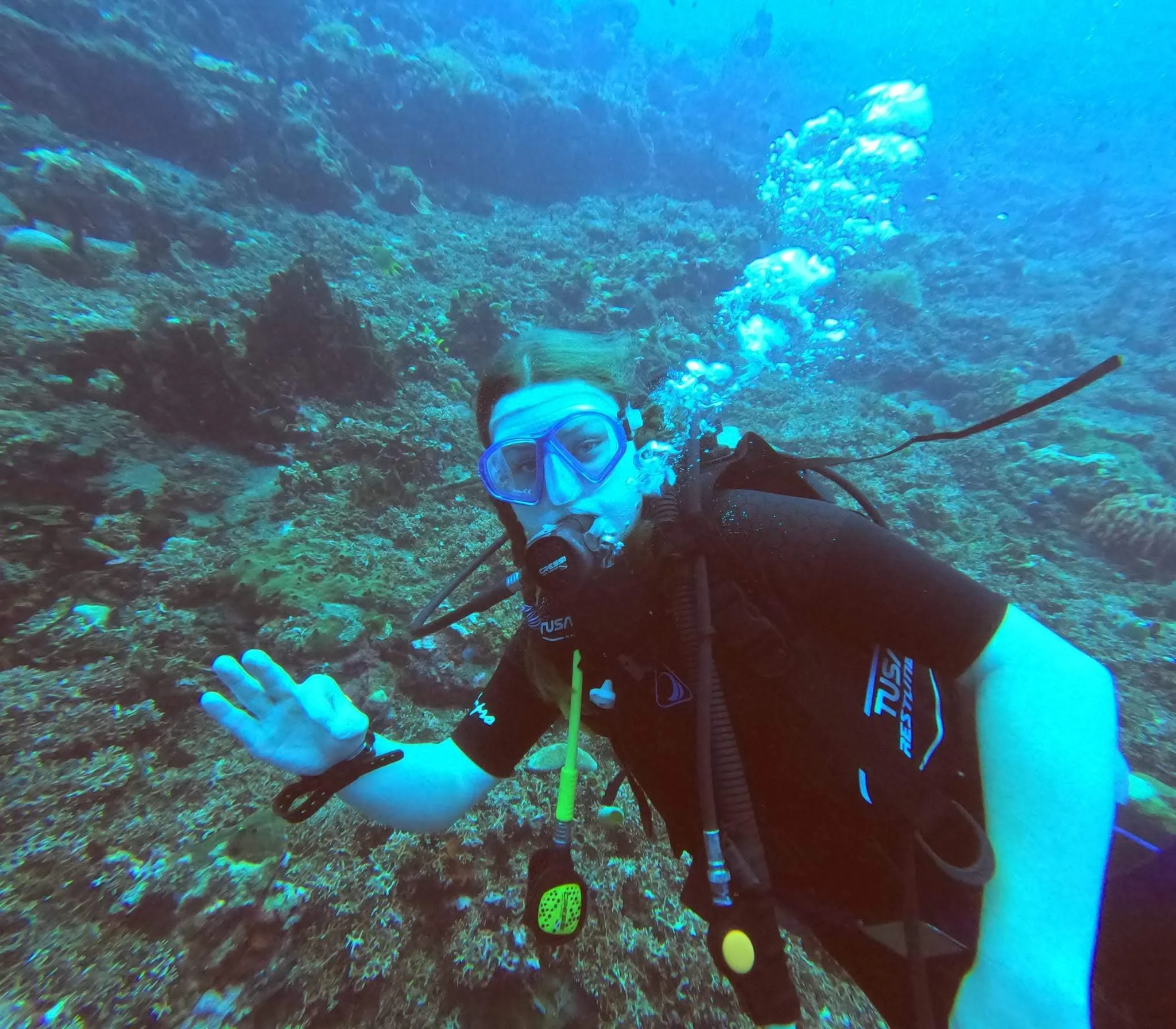
This is where the magic begins – at the child's pace, with security, curiosity, and a world that opens up beneath the surface.
Safety first – always
When talking about diving certification for children, safety is always the most important thing. Not as an empty phrase – but as a basic requirement. When we talk about safety in connection with diving certification for children, it is particularly about the framework surrounding teaching, progression, and repetition.
For us, it's personal. When we started traveling and diving with our own children, there was one thing that always came first: safety had to be as high as possible. Before experiences, before ambitions, and before certificates.
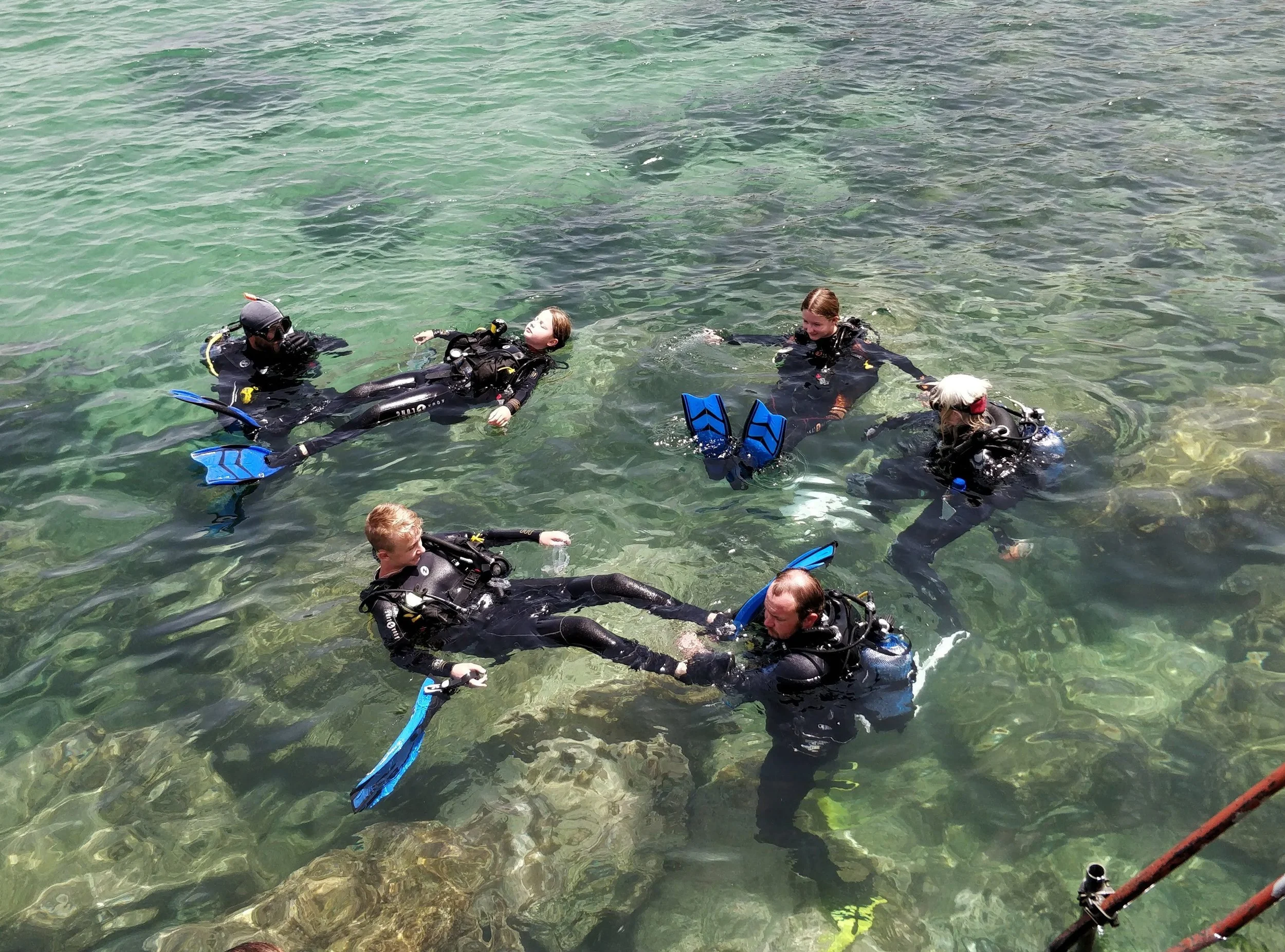
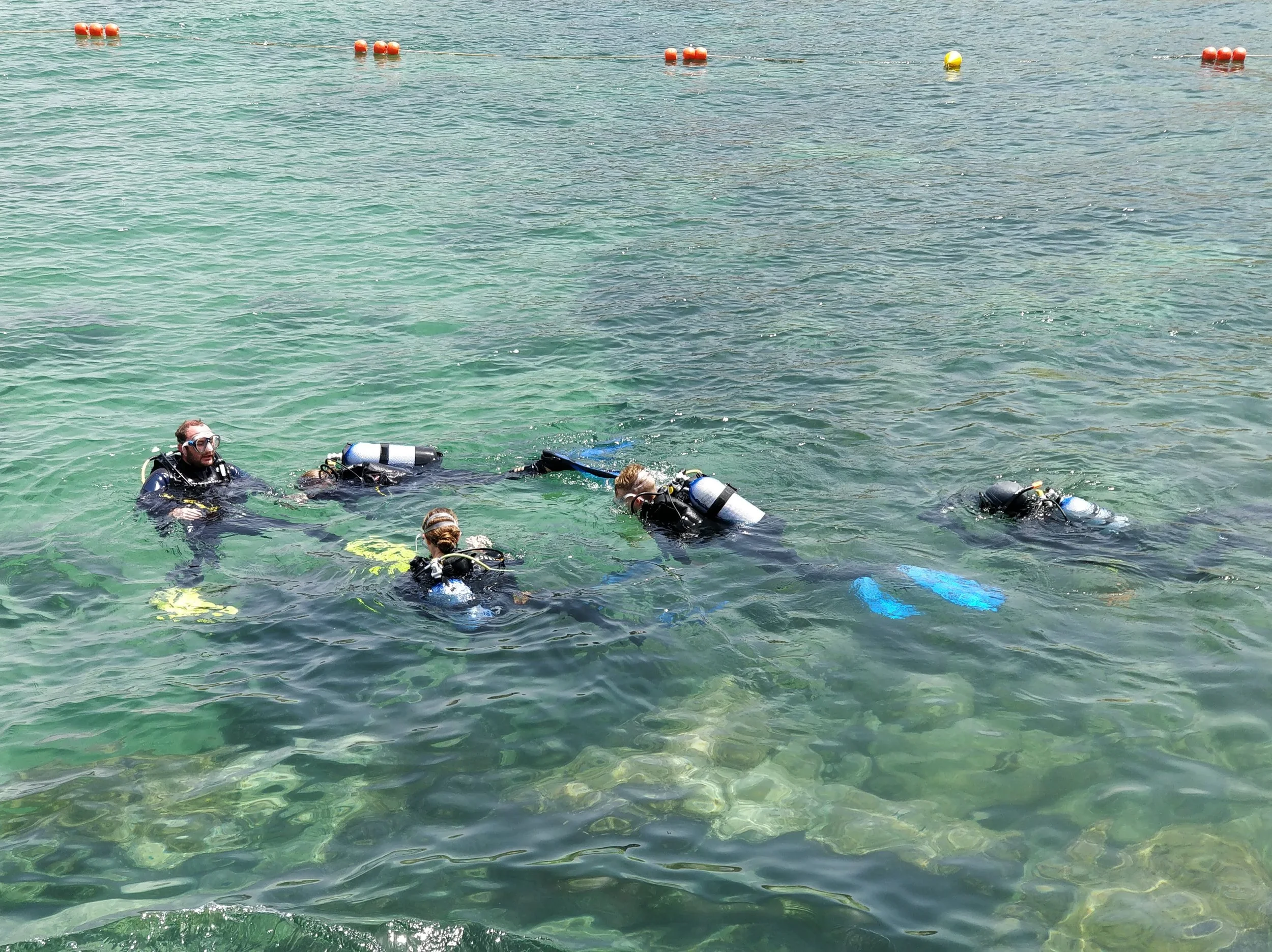
This is precisely the approach we have adopted. That is why we only work with professional diving centers that we know and trust – and that have extensive experience in teaching children and families. The lessons take place in small groups, with plenty of time and instructors who are trained to read children's signals – both above and below the water. It's not just about technique, but about being able to sense when a child is safe, curious, tired, or needs a break.
For mange familier starter rejsen med et roligt og trygt Prøvedyk for børn og begyndere, hvor barnet får mulighed for at mærke efter, om dykning føles rigtigt. Det er en vigtig del af processen. Der er ingen forventninger og ingen krav – kun en blid introduktion, hvor tryghed og lyst får lov at vokse i barnets eget tempo.
The depths are shallower than for adults, the exercises are adapted to the child's age, and there is never any pressure to "do it all." If something feels unsafe, you stop. Period. We have done this ourselves with our own children—and we do it again and again with the families we send off. For us, the most important thing is not how far you get, but that the child feels safe, seen, and wants to continue.
Children learn at different speeds – and that's perfectly okay
One of the most beautiful things about watching children get their diving certification is how differently they learn. Some are ready from their first breath underwater, while others need a little more time to get used to the equipment, the calmness, and the feeling of weightlessness.
There is no one right pace.
Something we often see is how the children inspire each other along the way. One quickly figures out how to fasten the buckles on the equipment. Another discovers the smartest way to put on the mask—even underwater. Suddenly, they are sharing tips, helping each other, and growing together. This creates a very special dynamic where learning comes not only from the instructor, but also from the children themselves.
A good diving course for children takes this into account. Exercises are repeated at a leisurely pace, there is room for questions – and for breaks. At the same time, there is room for children to mirror each other and discover that you can easily learn in different ways. When children are allowed to learn on their own terms – and at the same time feel that they can contribute to others' learning – something special happens: self-confidence.
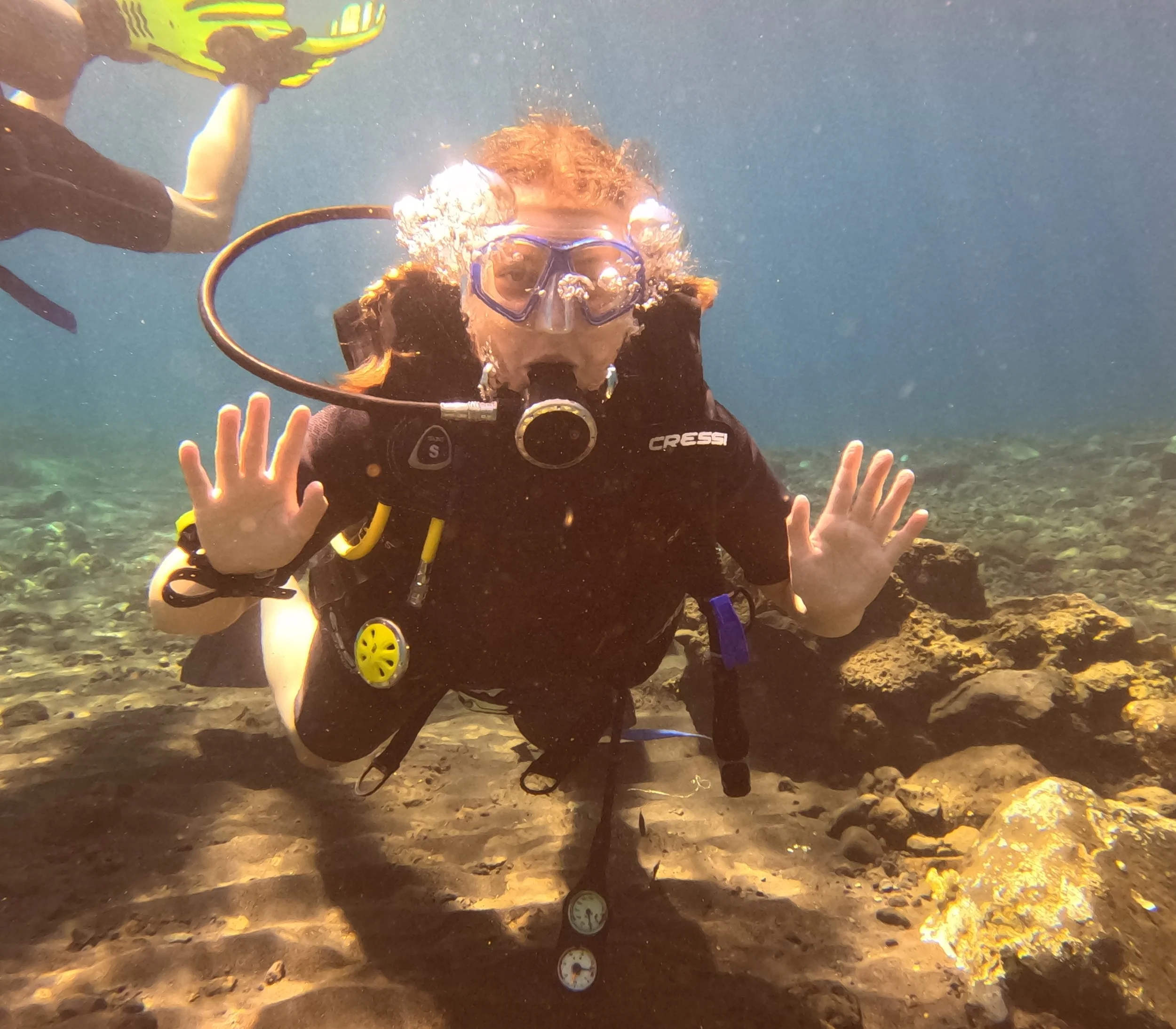
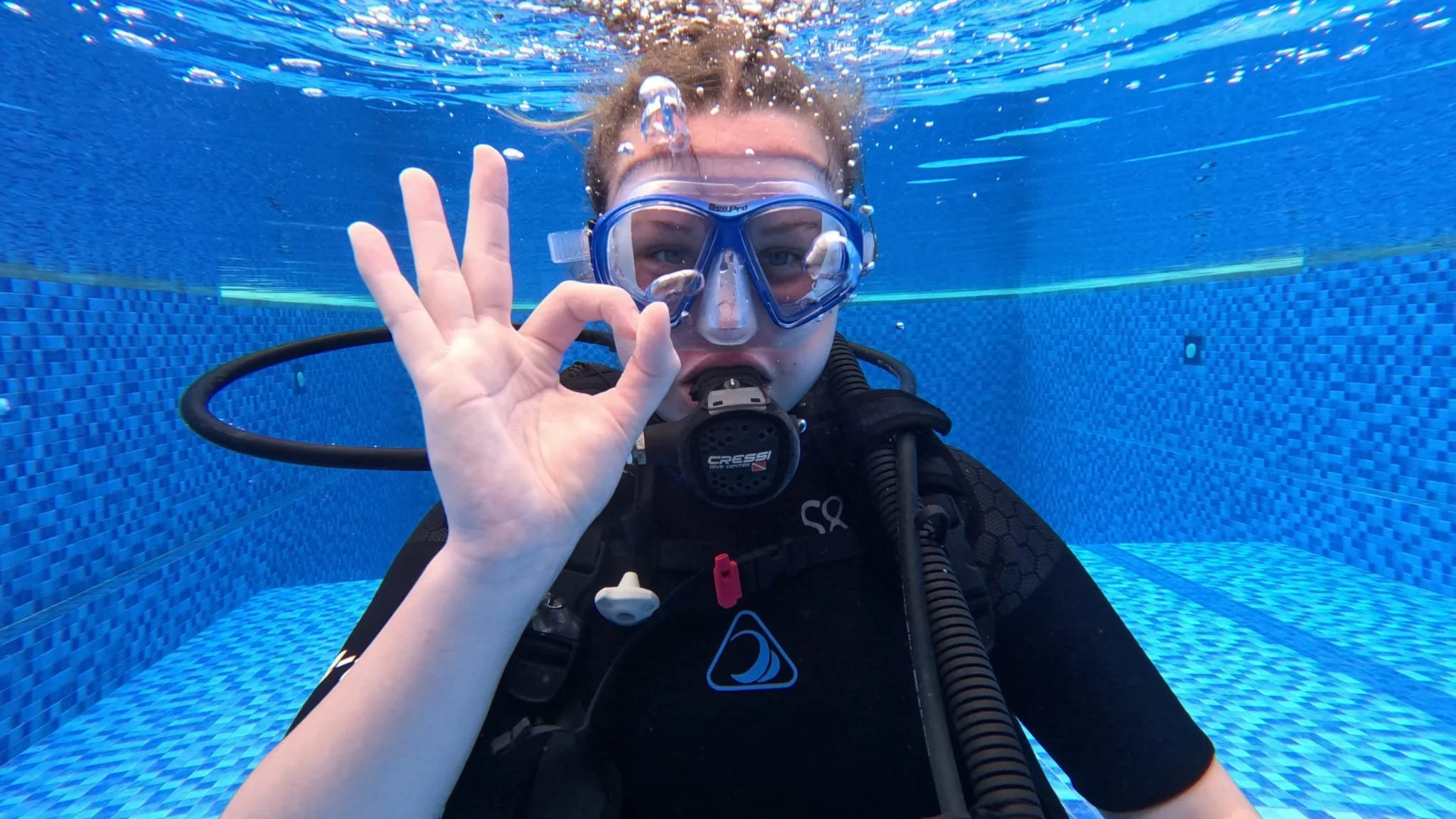
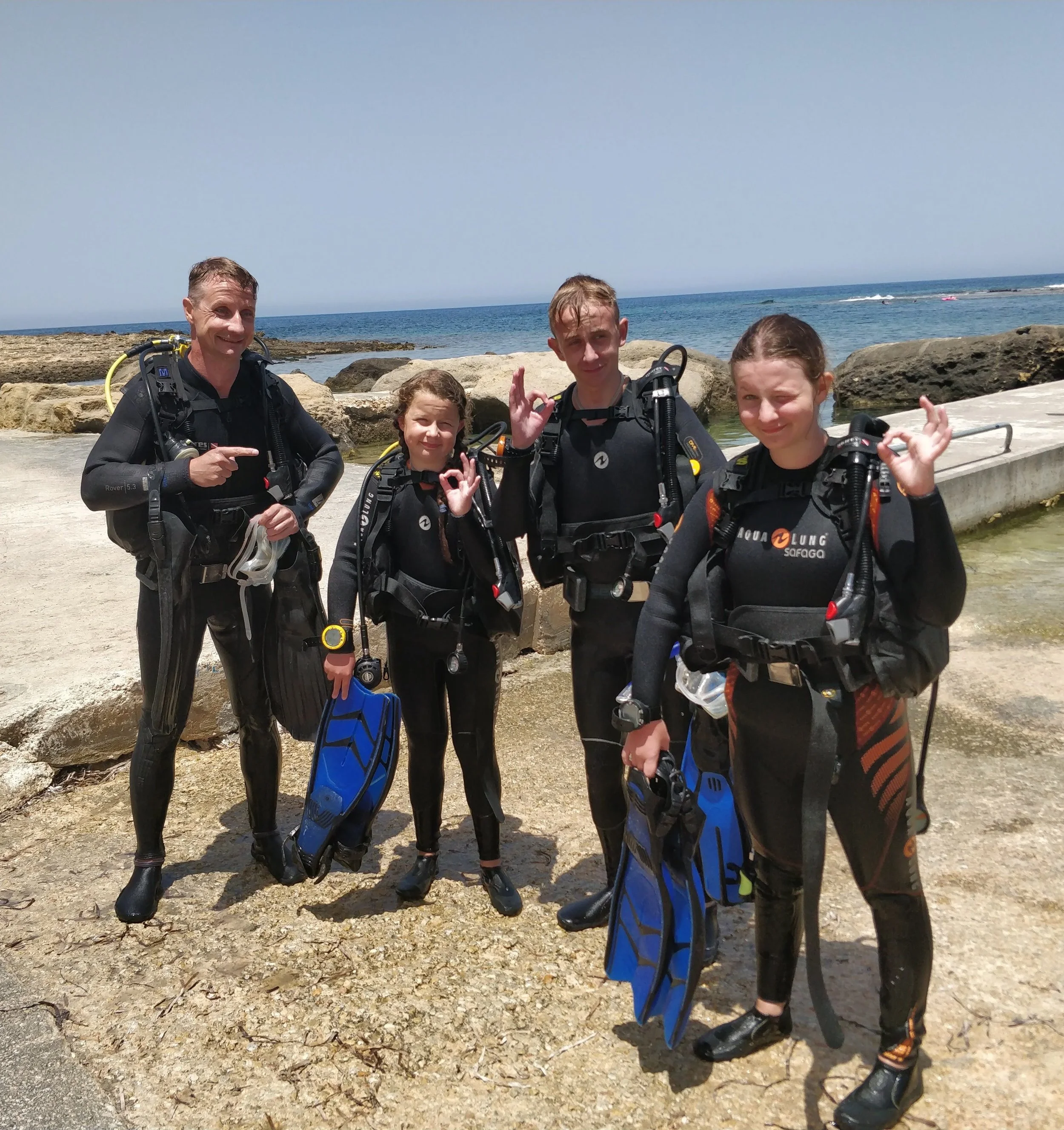
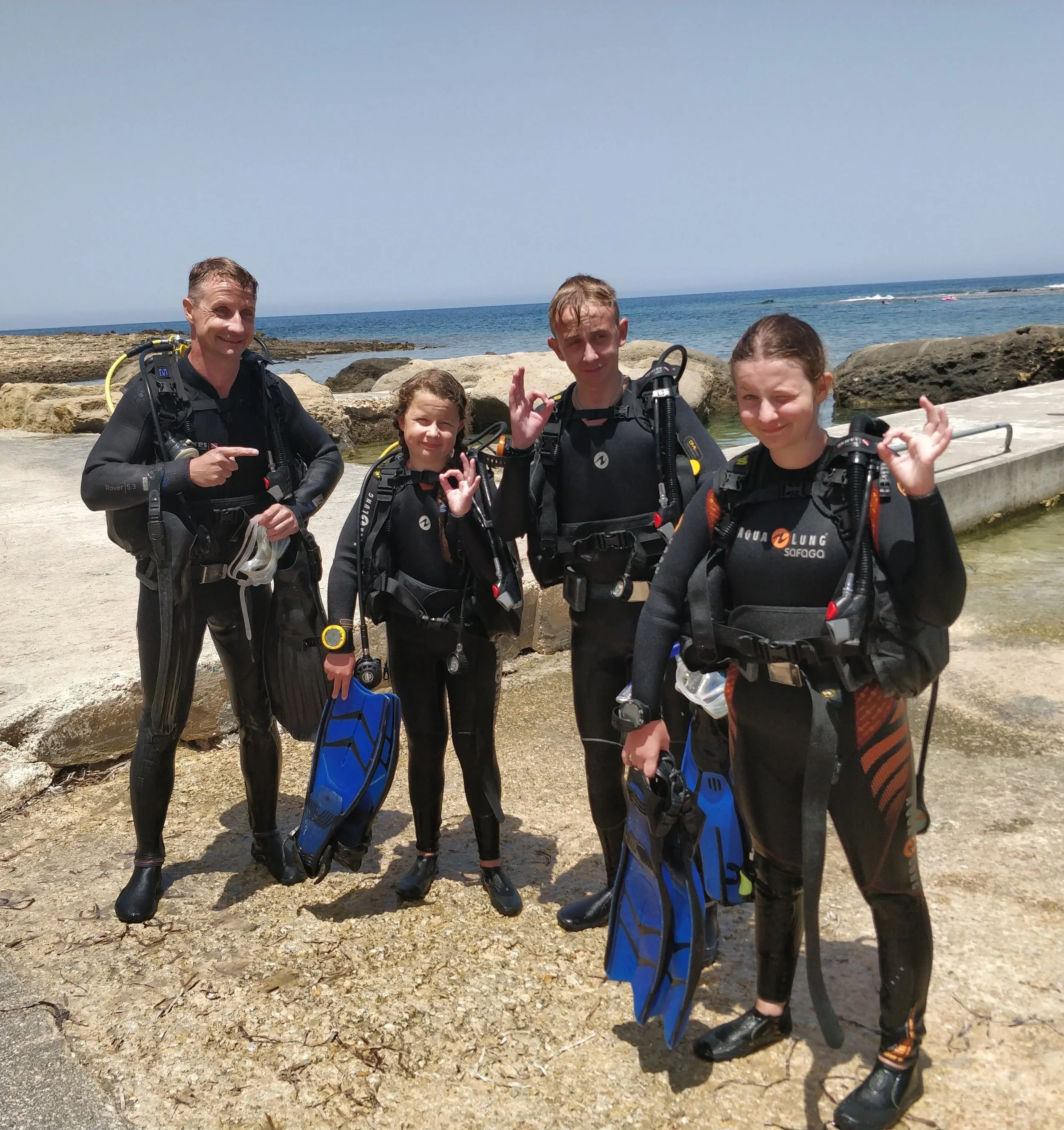
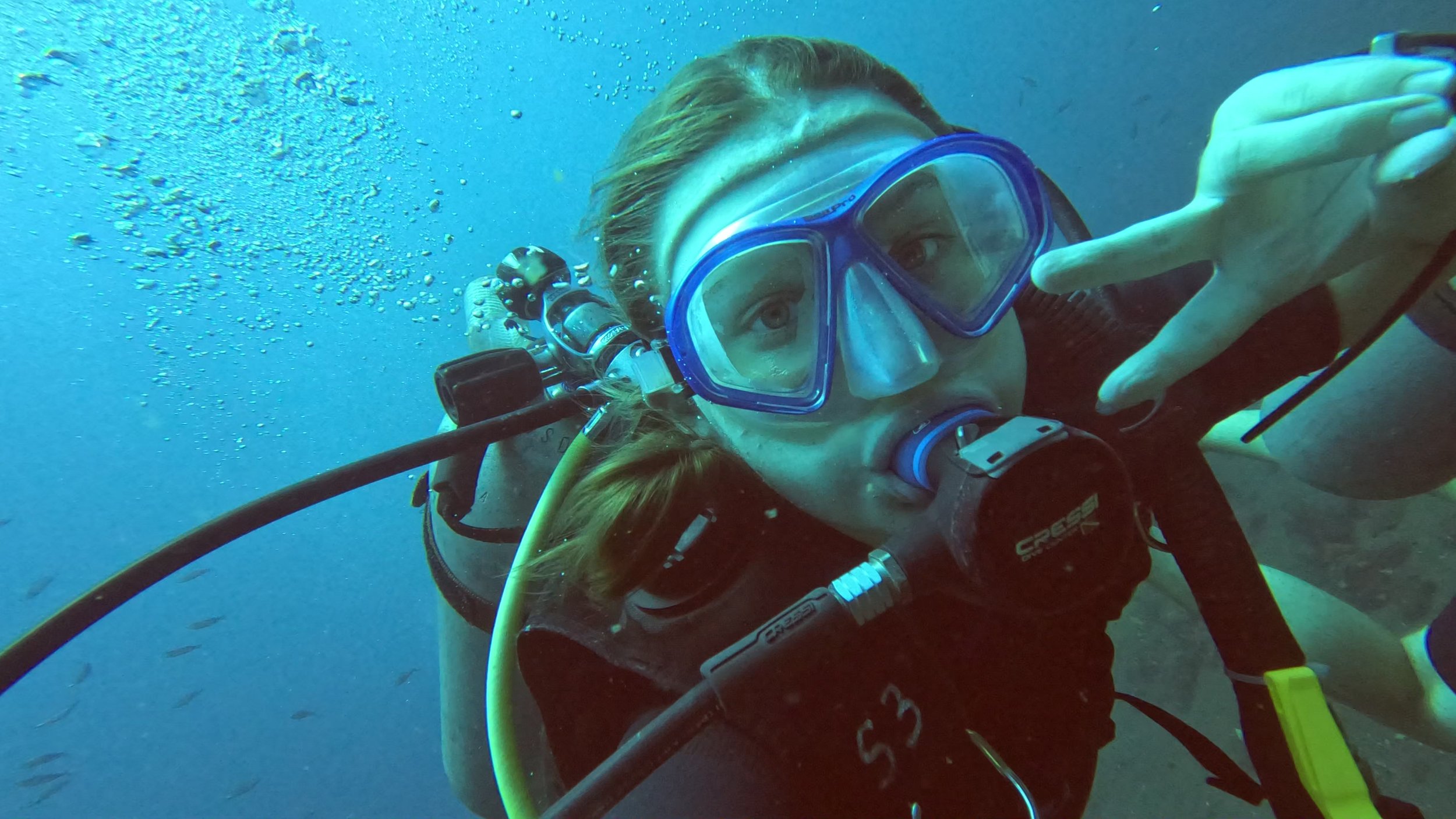
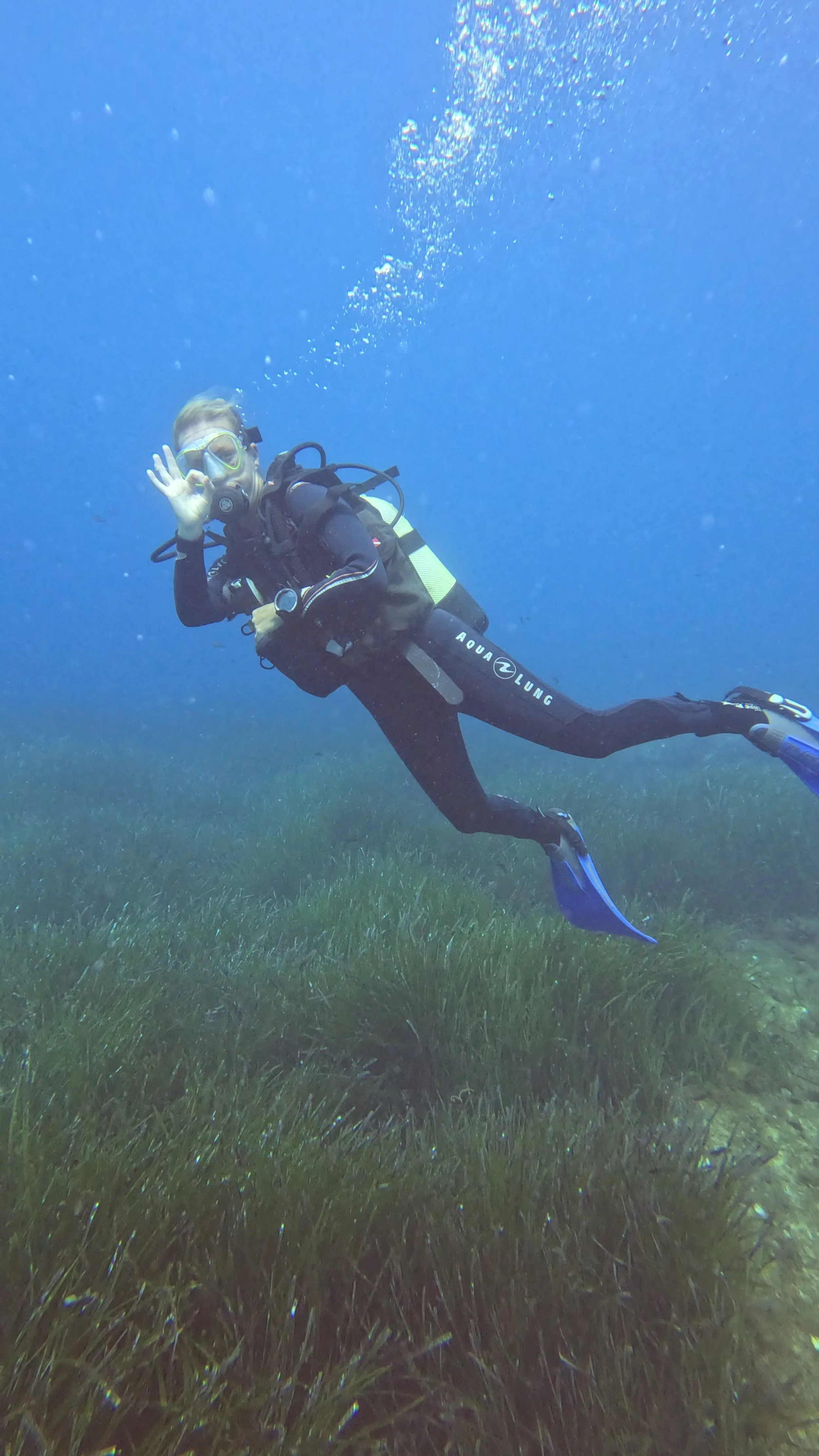
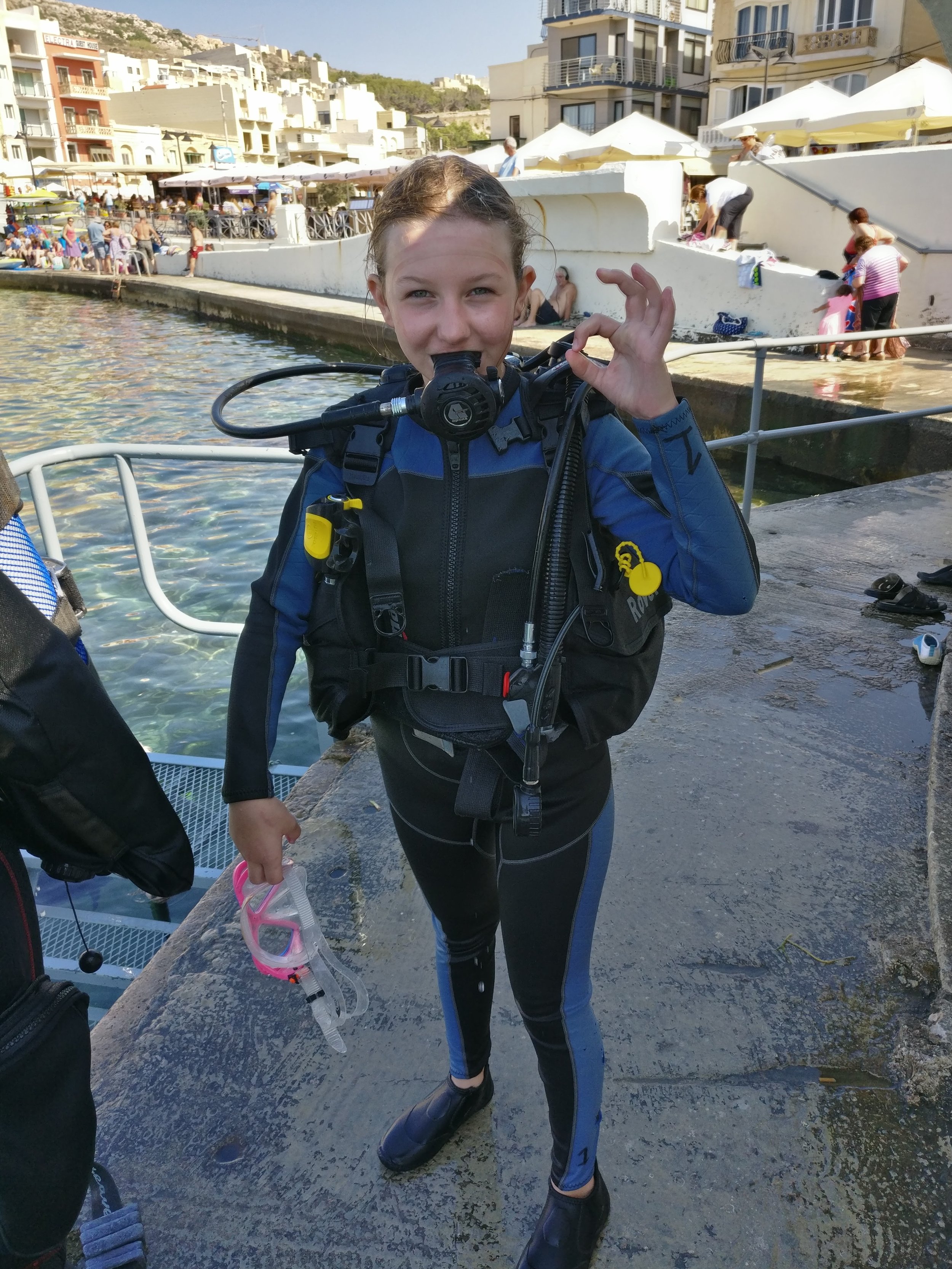
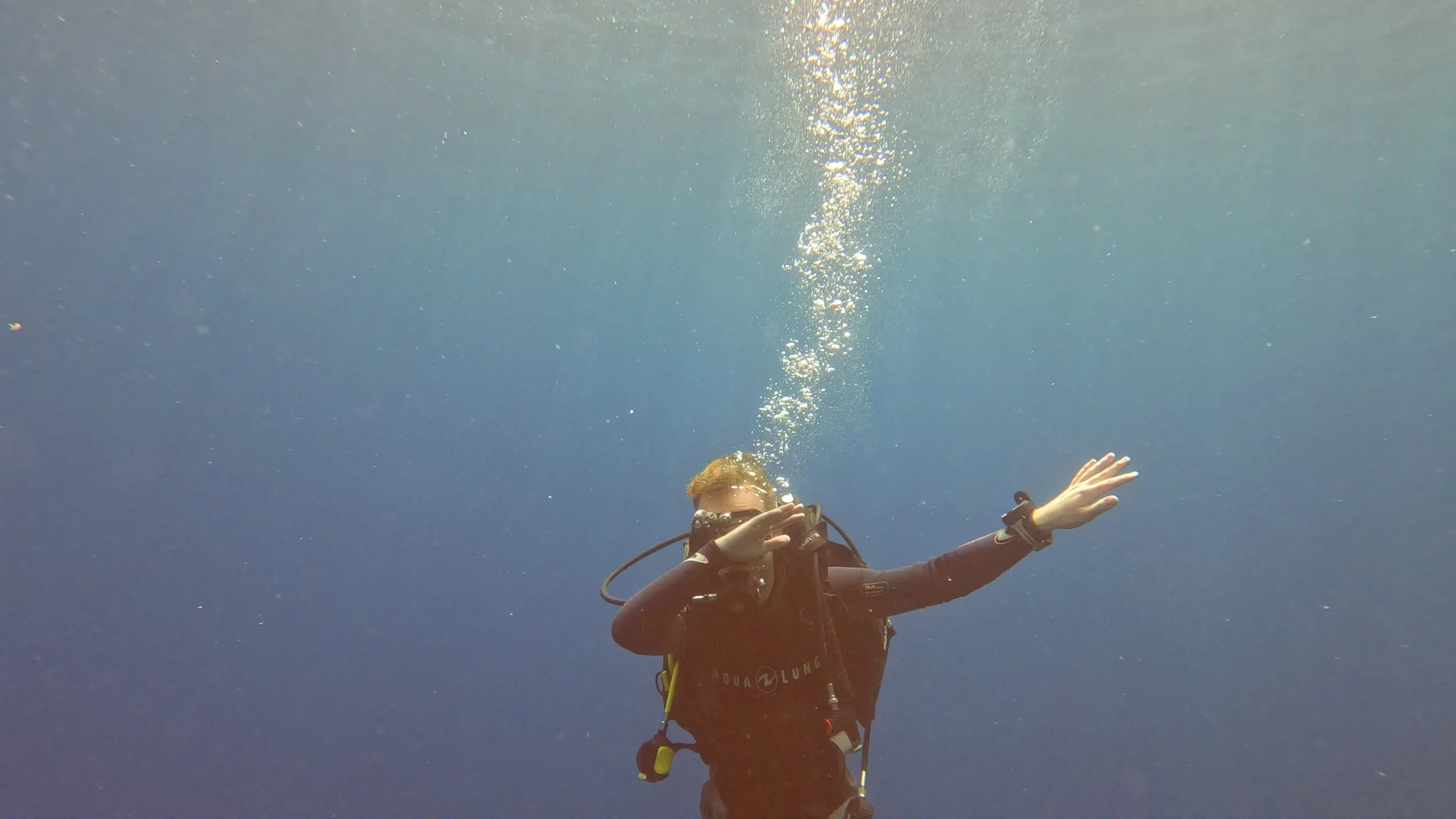
The universal sign for: "I'm okay."
When children feel safe, both their self-confidence and joy grow—one step at a time, at their own pace.
Theory that makes sense – because it is used in real life
A diving course for children is structured so that theory and practice go hand in hand – and that is precisely why many children find the theory fun. Instead of long, tedious explanations, the children work with short sections, small tasks, and clear examples. There are pictures, illustrations, and videos that make it easy to understand what happens underwater and why you do what you do.
Many children today study theory through e-learning at home —in a calm environment where they feel comfortable. This provides a special sense of calm. They can study at their own pace, take breaks, go back through the material, and review things again. Some children want to move on quickly, while others immerse themselves and ask questions along the way. Both approaches are equally valid.
One thing we often see is that children are motivated by small successes along the way. A section has been completed. A task has been solved. A video suddenly makes sense because they can connect it directly to something they have already experienced with a snorkel or on their first dive. "Oh, that's what they meant!"
And when the children later get into the water, everything falls into place. The theory is not something they have to memorize—it becomes a tool they actively use. How to equalize pressure. Why to breathe calmly. How to communicate with hand signals. It all makes sense because they can feel it in their bodies.
For many children, theory therefore becomes part of the experience – not an obstacle. It creates security, understanding, and pride. And it is precisely this combination that means children not only learn to dive, but also learn why they do what they do.
If you want to make this dream a reality, you can read more about a safe and adventurous family diving vacation here.
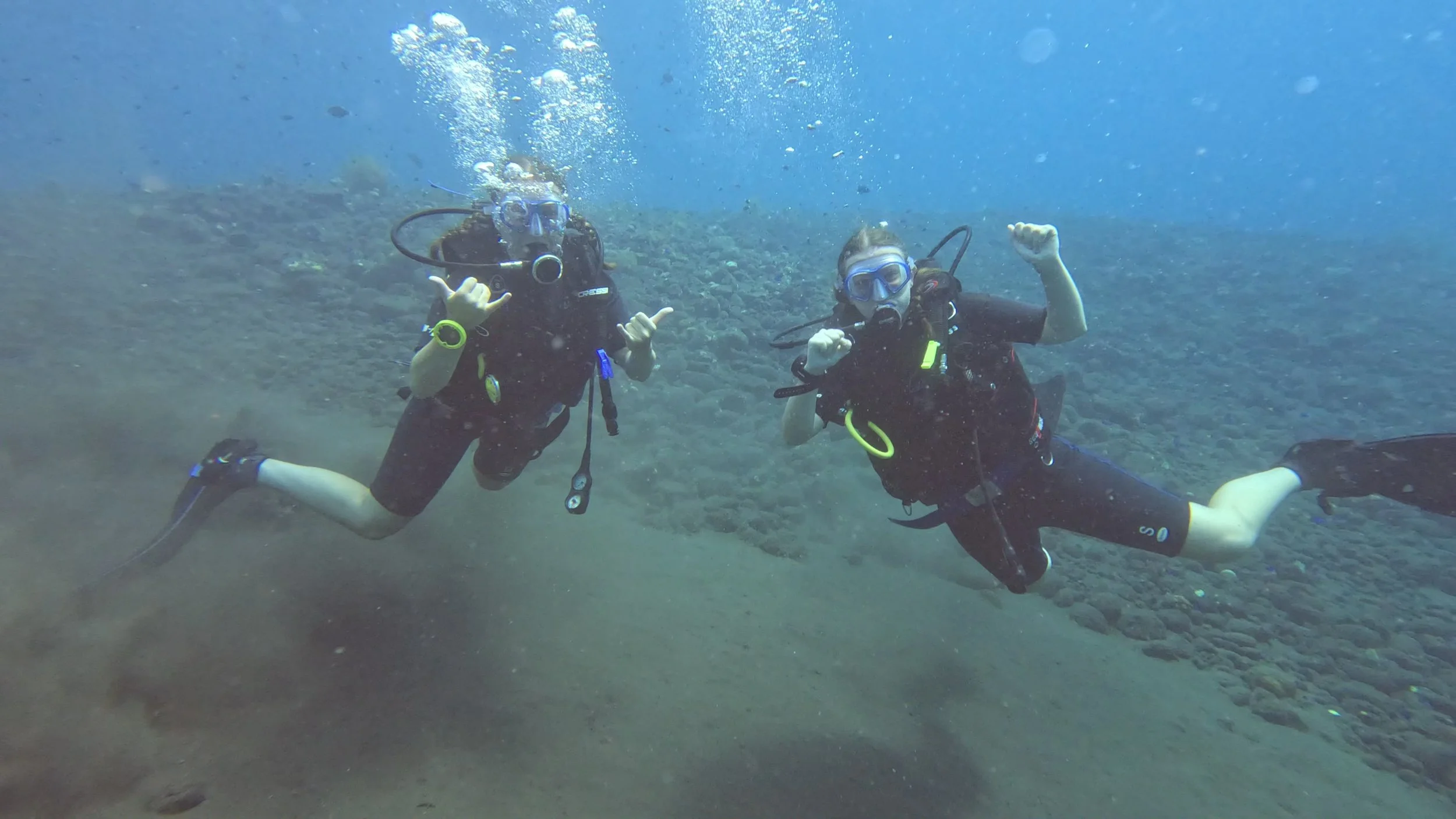
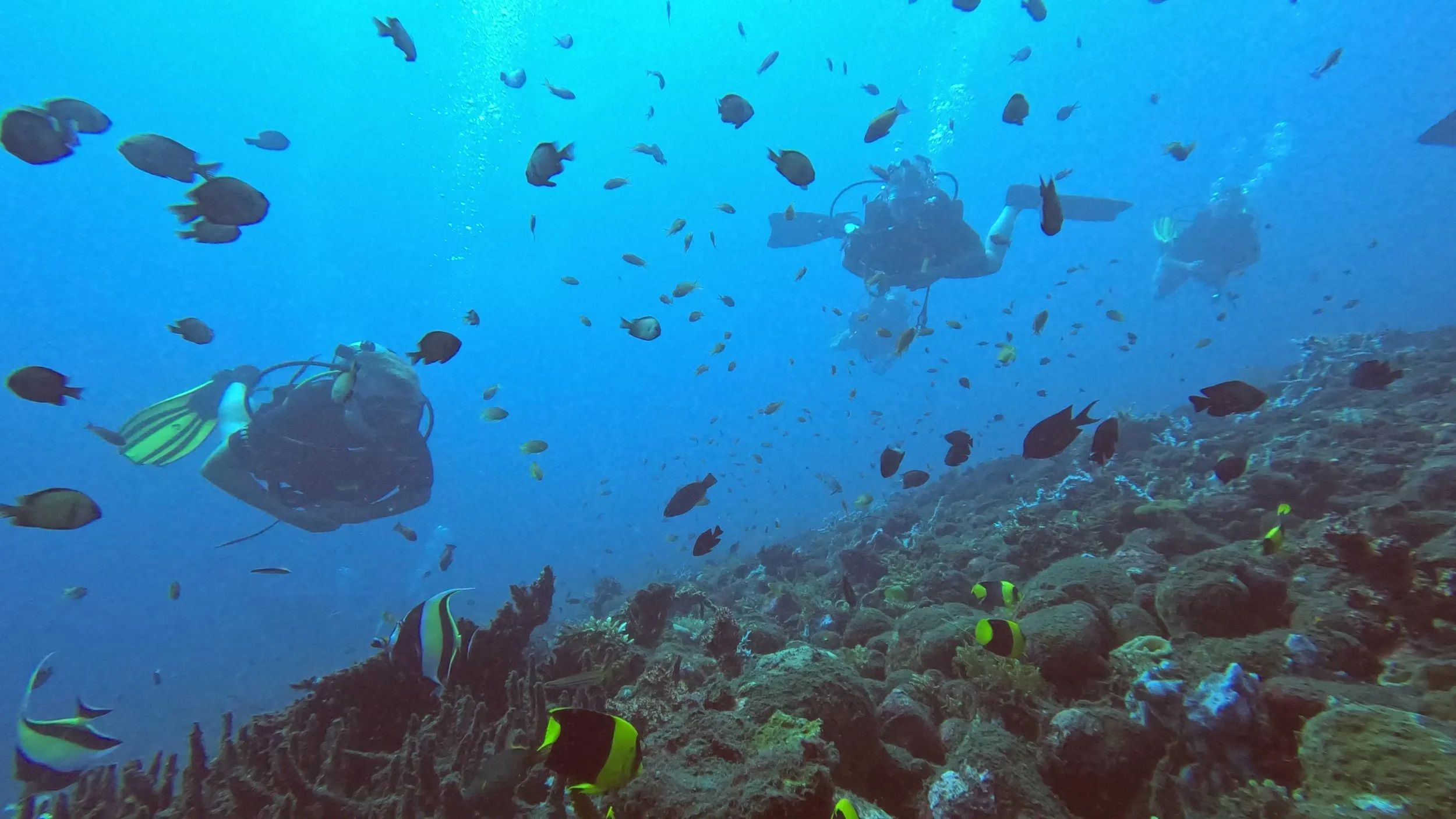




The underwater experience – the magic that ignites the spark
For many children, the fascination starts even earlier. They have snorkeled along the coast, seen colorful fish gliding beneath the surface, or looked down at the reef and thought: "I wonder what's hiding down there?" The diving certificate becomes the key that opens the door to the world they have only seen from above – or in pictures and videos.
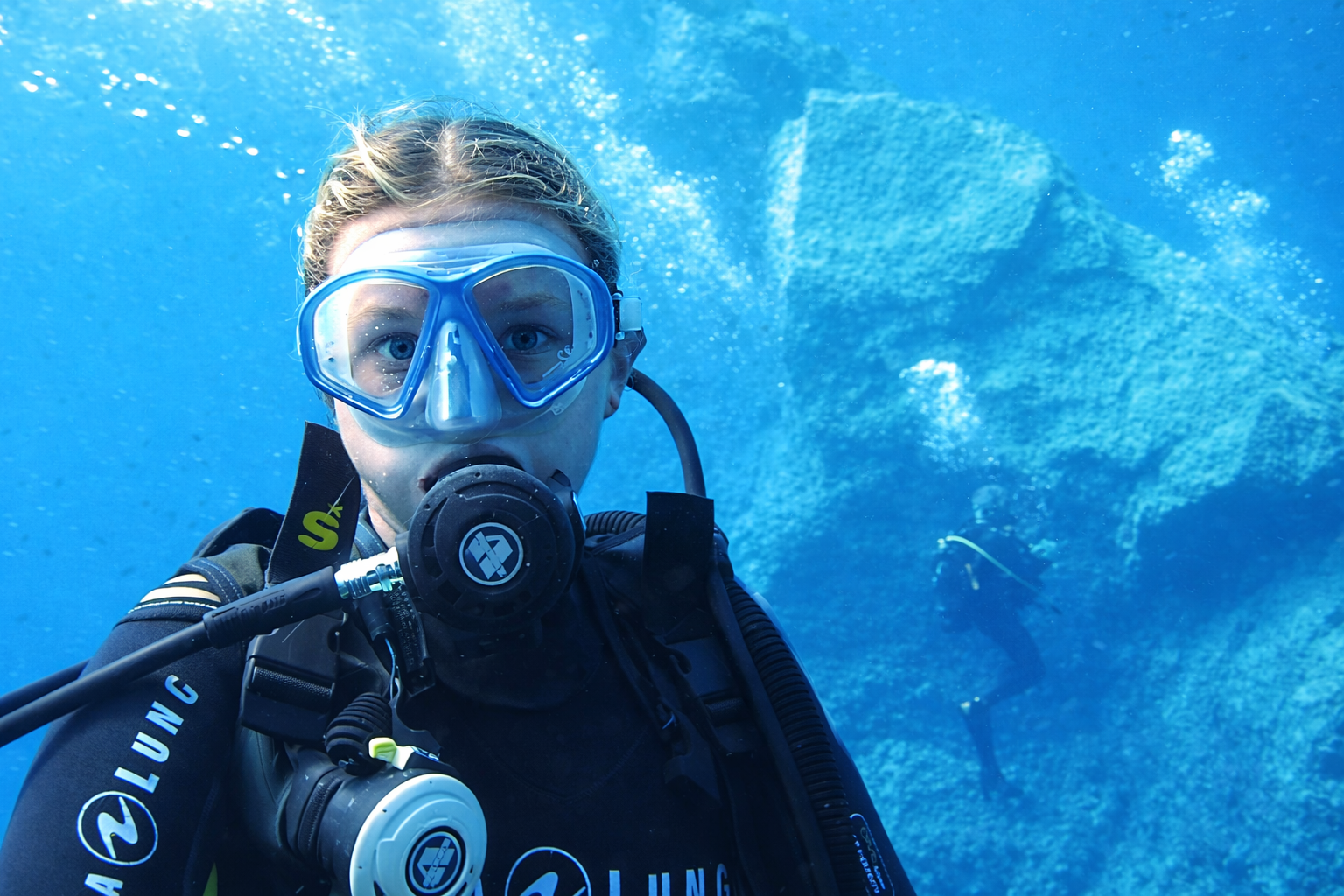
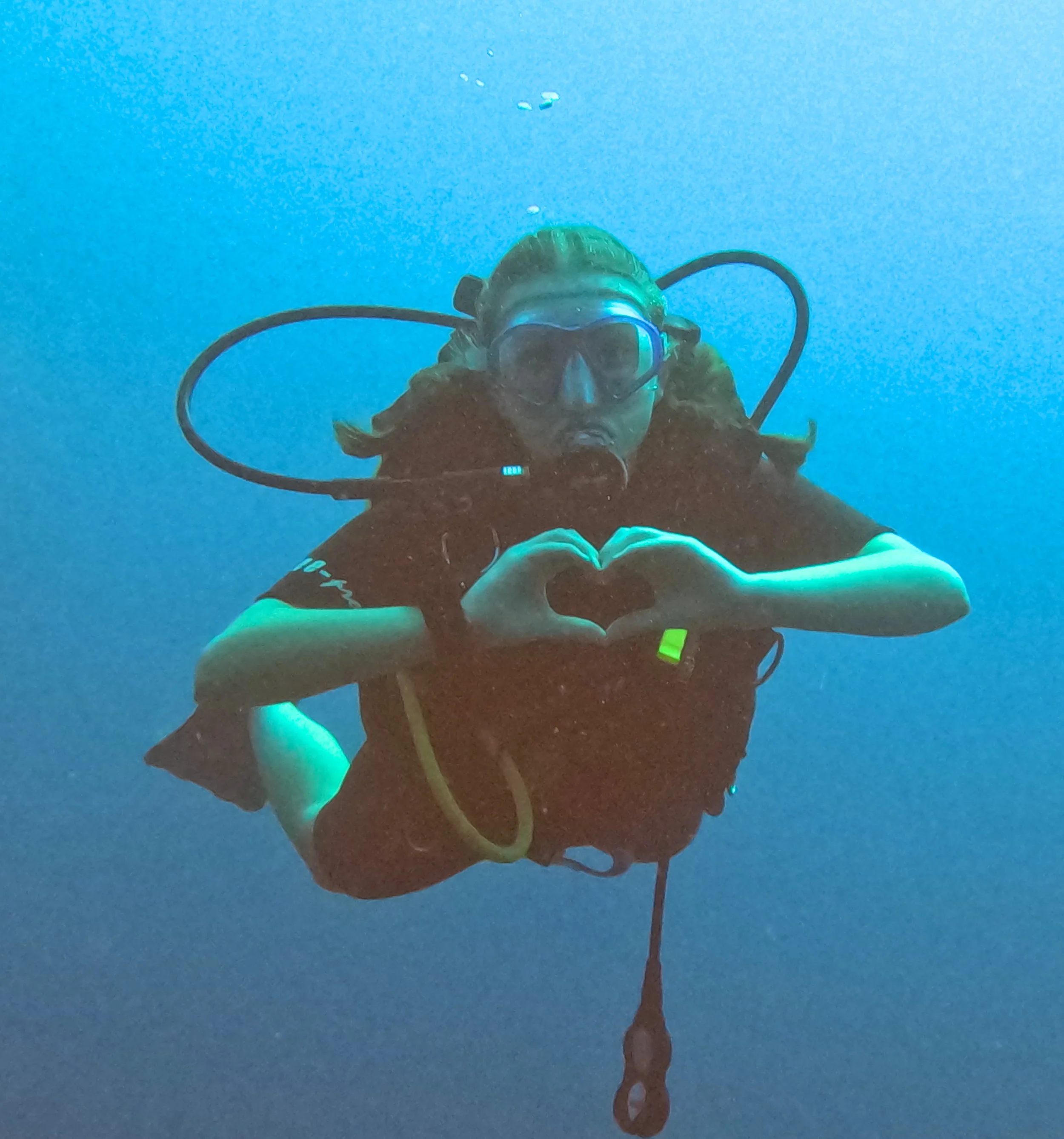
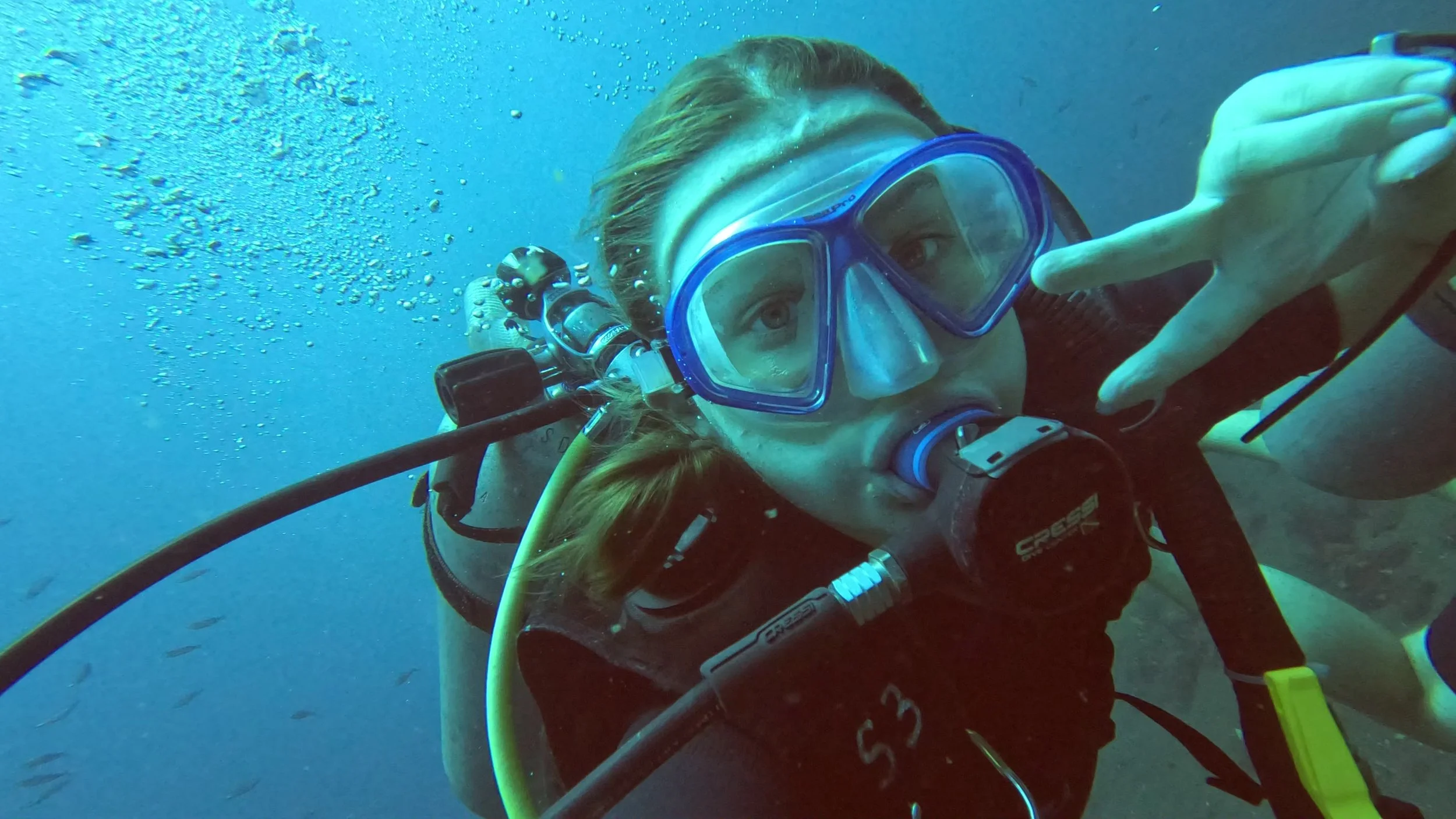
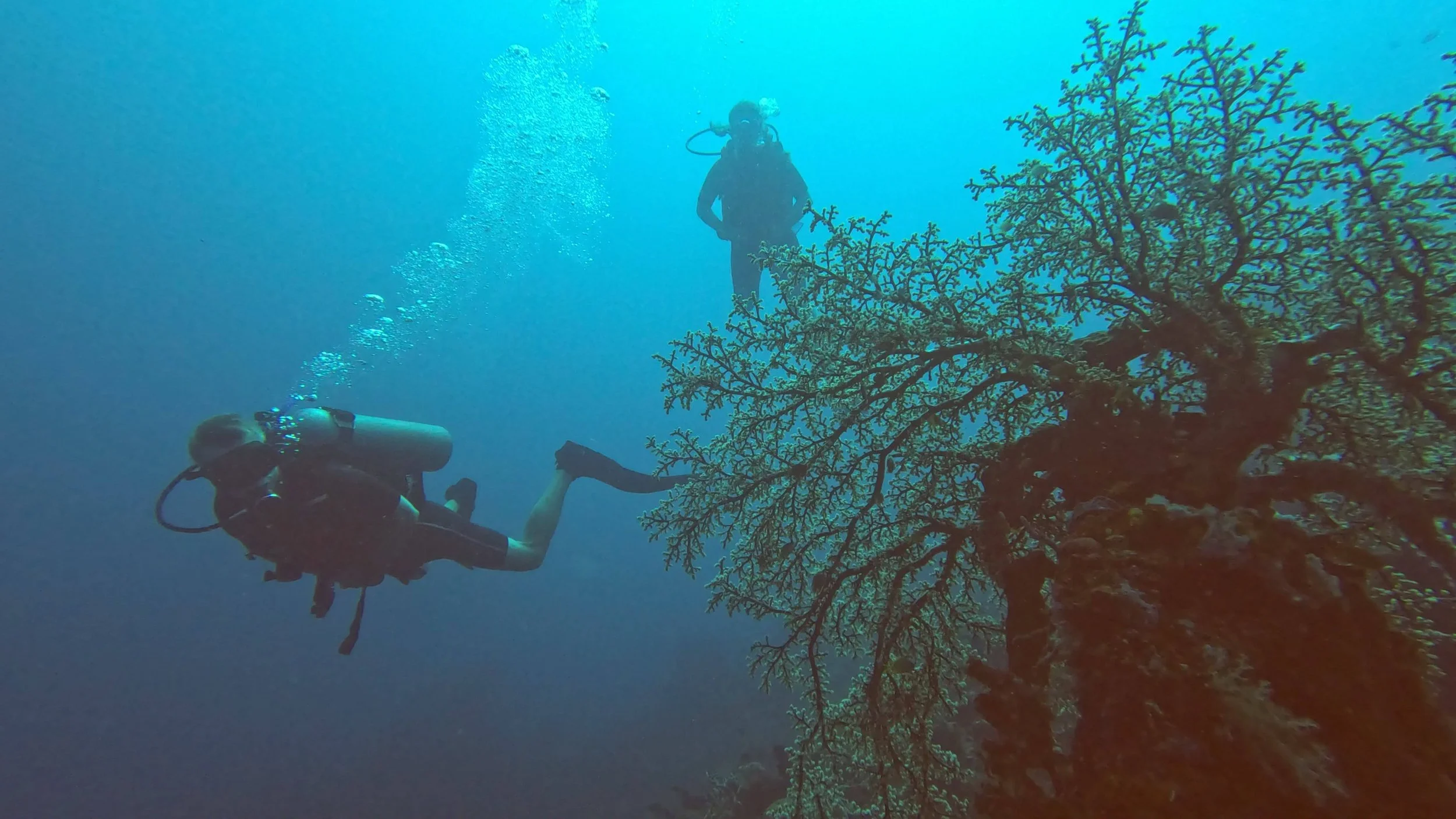
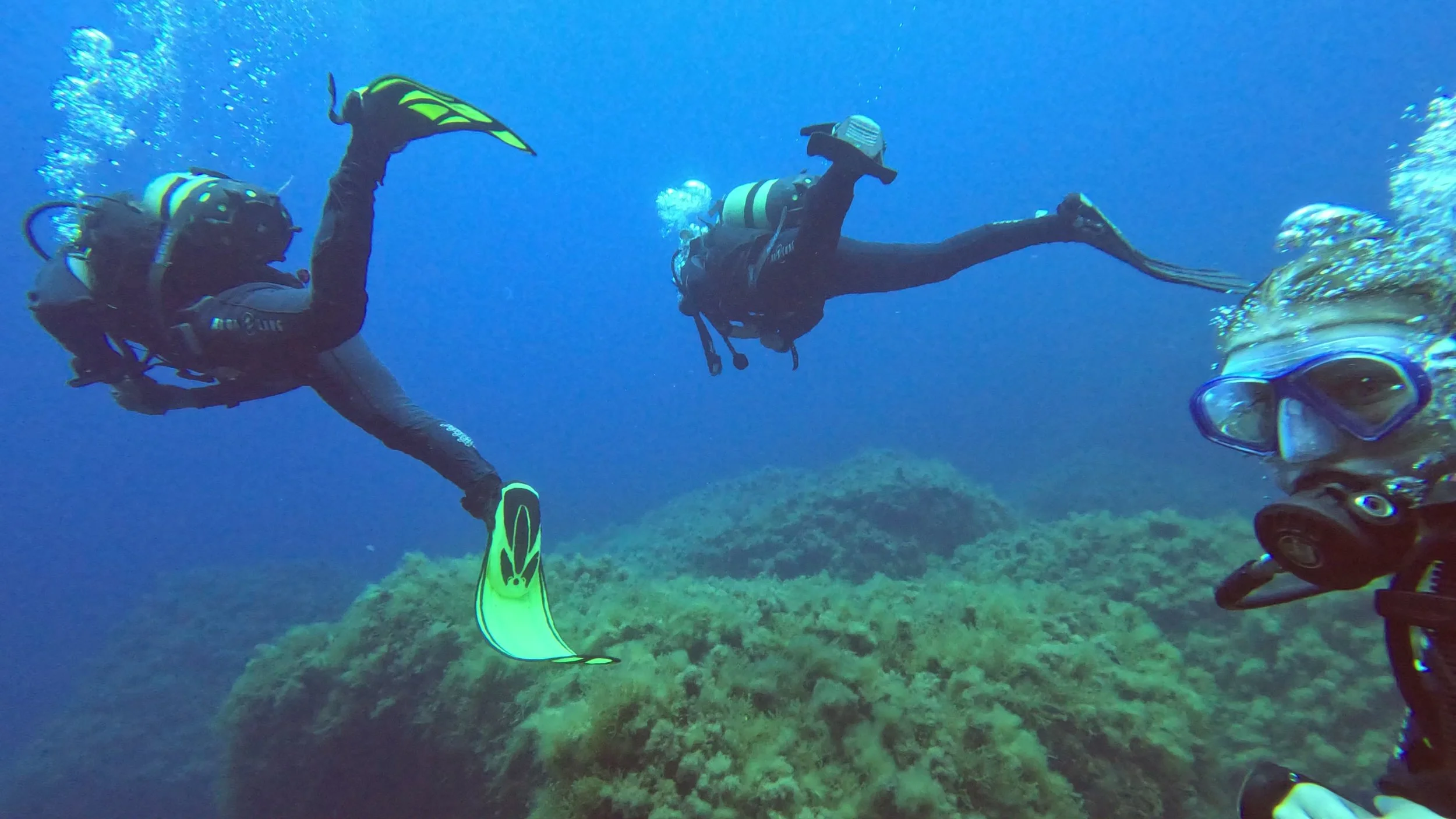
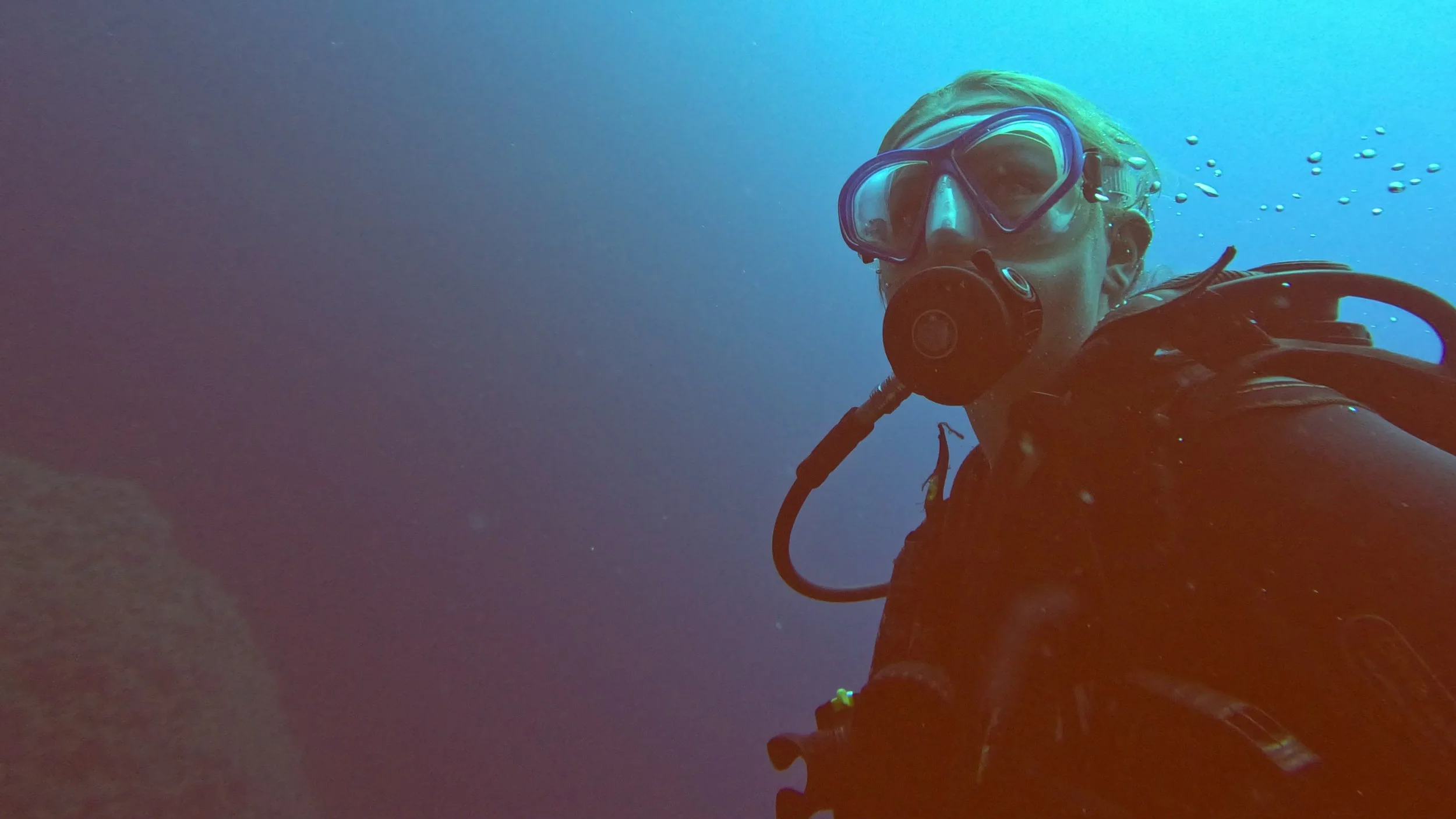
When children first go underwater, something special often happens. They become present and focused. They forget about time and performance and just enjoy the experience. An eye shining behind the mask, a smile in the regulator, an eager sign to the parents: "Look at that!" These are moments that stick in the memory – both for the children and for you as parents.
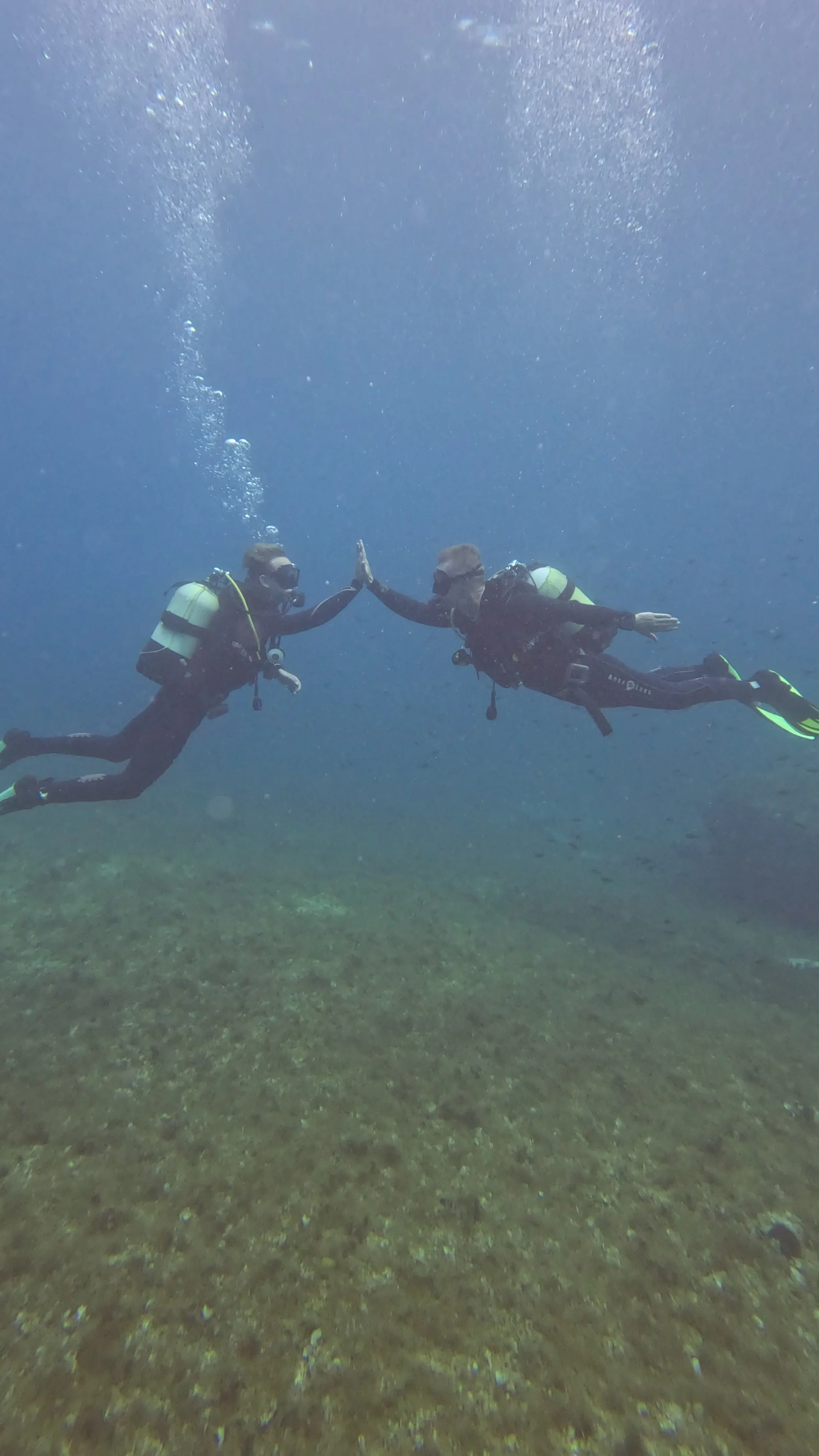
The experience becomes even more powerful when shared. Diving side by side as a family, pointing out fish and corals, and then talking about what you have seen creates a common language and memories that live on long after the vacation is over. Many families find that these first dives are the highlight of the entire trip.
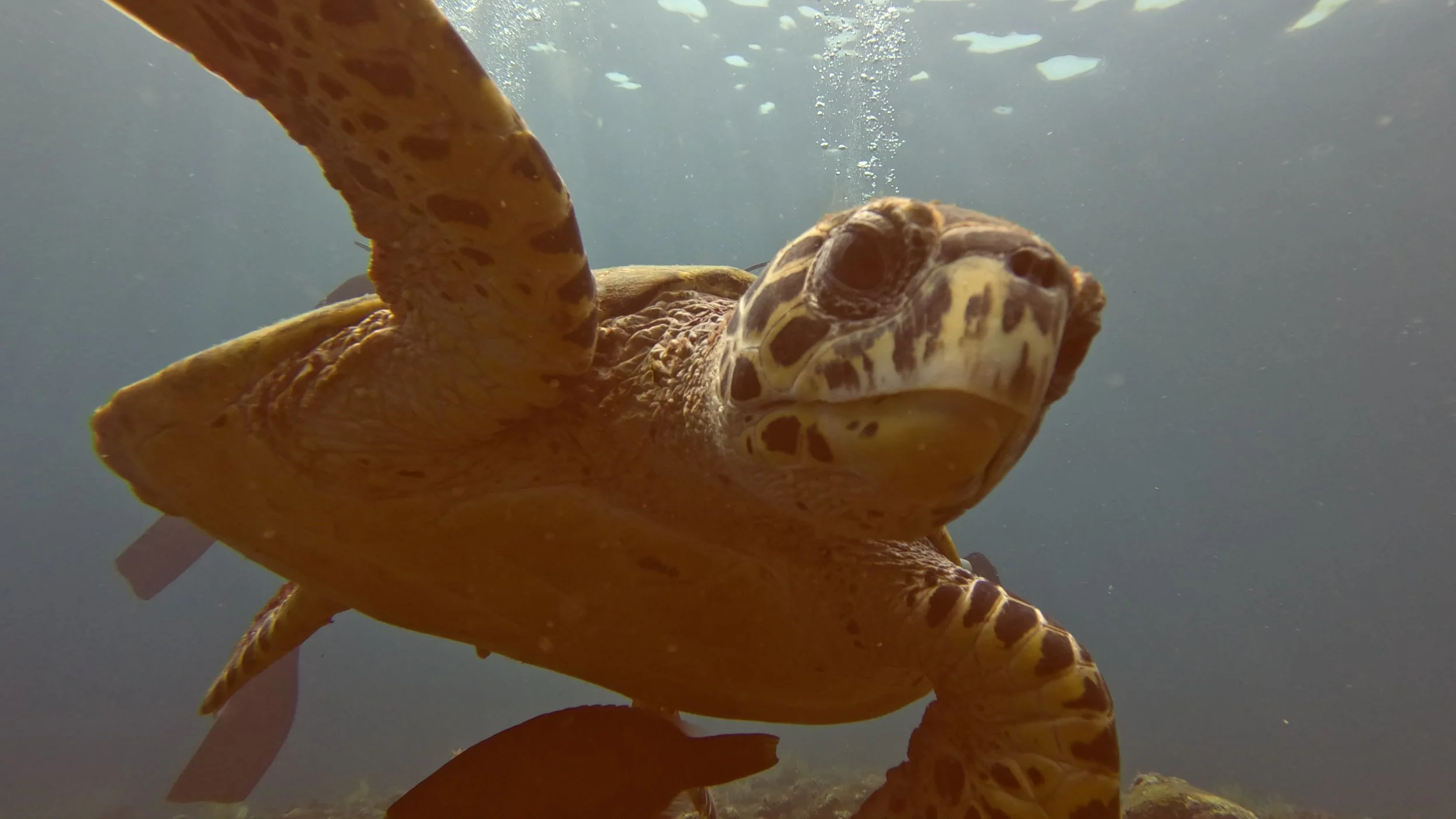
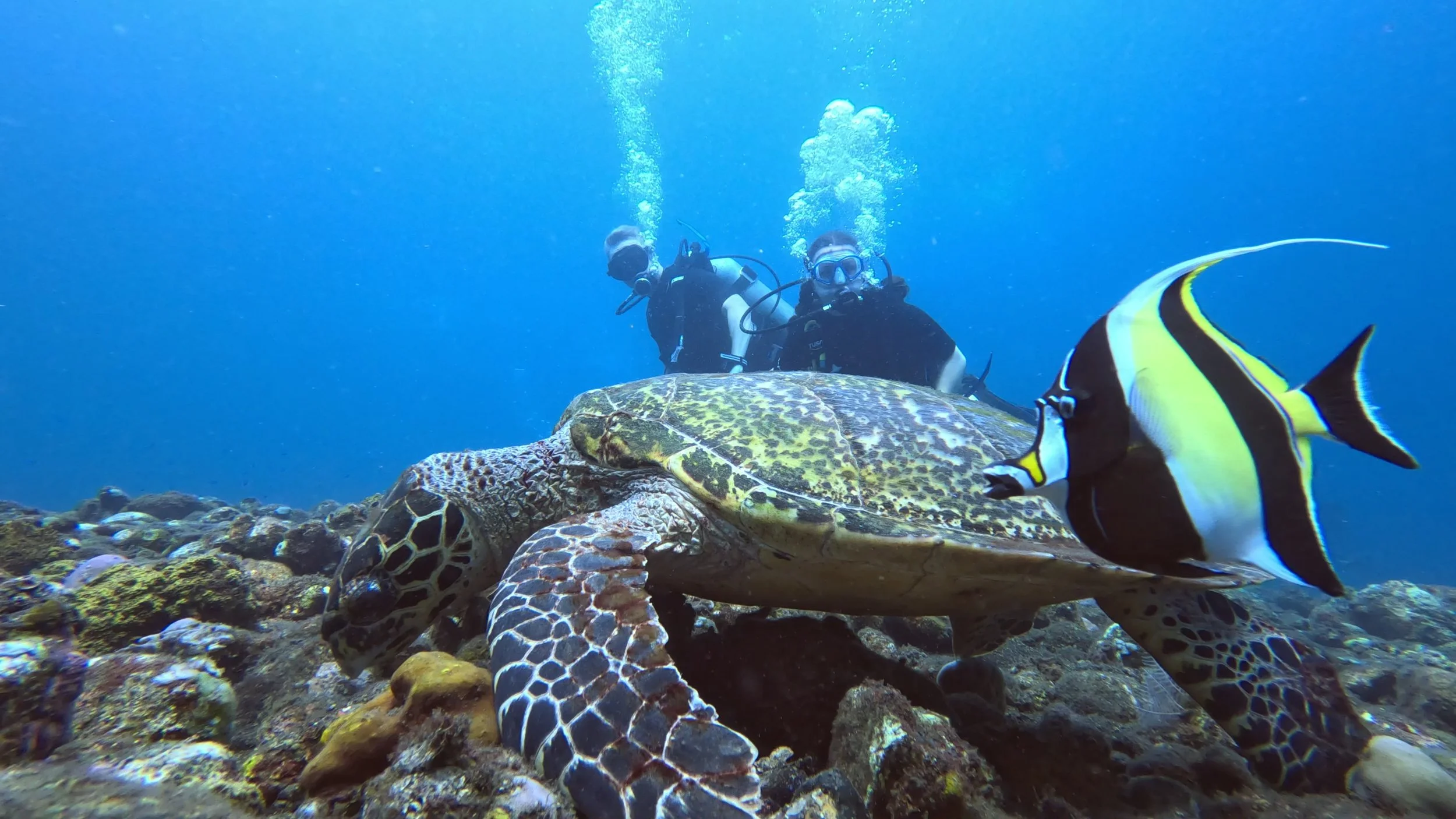
Hvis I vil give børnene en blid og tryg indgang til denne verden, kan oplevelsen under vandet ofte blive endnu stærkere, når der er noget helt særligt at kigge efter. For mange børn er det mødet med de store, rolige dyr, der sætter sig fast – som når en havskildpadde glider forbi i sit eget tempo. Netop derfor vælger mange familier destinationer, hvor chancen for sådanne møder er stor, fx når I kan Møde havskildpadder på Bali. For nogle bliver det én uforglemmelig oplevelse – for andre begyndelsen på en livslang passion.
FAQ – Diving certification for children
-
From the age of 8, you can try diving (Bubblemaker/Try Scuba). Junior Open Water is a real certificate with theory and more – you can take it from the age of 10.
-
Lower than for adults – typically 2–6 meters for the youngest, max. 12 meters for Junior Open Water.
-
Small class sizes, child-trained instructors, extra focus on safety, and breaks.
-
No time pressure – children learn at different speeds, and the course is tailored to each individual.
-
Experience, understanding, and enjoyment of diving—not performance. Just pure joy of life :-)
-
Children are often driven by curiosity and fascination. Many are inspired by stories from parents and friends, their own experiences with snorkeling, videos, and stories—others are only truly captivated the moment they experience the silence and life beneath the ocean's surface.
Community – as a family and with other divers
A family diving vacation with children provides an opportunity to share experiences beneath the surface of the ocean – but the community does not stop with the family. One of the most unique aspects of diving is that it creates connections across age, language, and culture. Underwater, we are all equal. It is not about where you come from, but about what you experience together.
When children obtain their diving certification while on vacation, they often meet other children and adults from all over the world. Friendships develop naturally on the dive boat, around the equipment, or between dives. A smile behind the mask, a hand signal underwater, or a laugh when sharing stories about what you have seen afterwards – it is a common language that everyone understands.
For many children, it is an eye-opener. They discover that you can share something even if you don't speak the same language. That you can help each other with the equipment, share your enthusiasm for a fish, a turtle, or a wreck—and feel part of a larger community.
At the same time, diving becomes something that brings your family together. You share the preparations, the experiences underwater, and the conversations afterwards. It provides a common point of reference that you can return to again and again—both during the trip and long after you have returned home.
Many families tell us that it is precisely this sense of community that makes a diving holiday so special. It is not just an activity, but something you share with each other and with people from all over the world. A community that transcends language and culture – and often leaves a lasting impression long after the holiday is over.
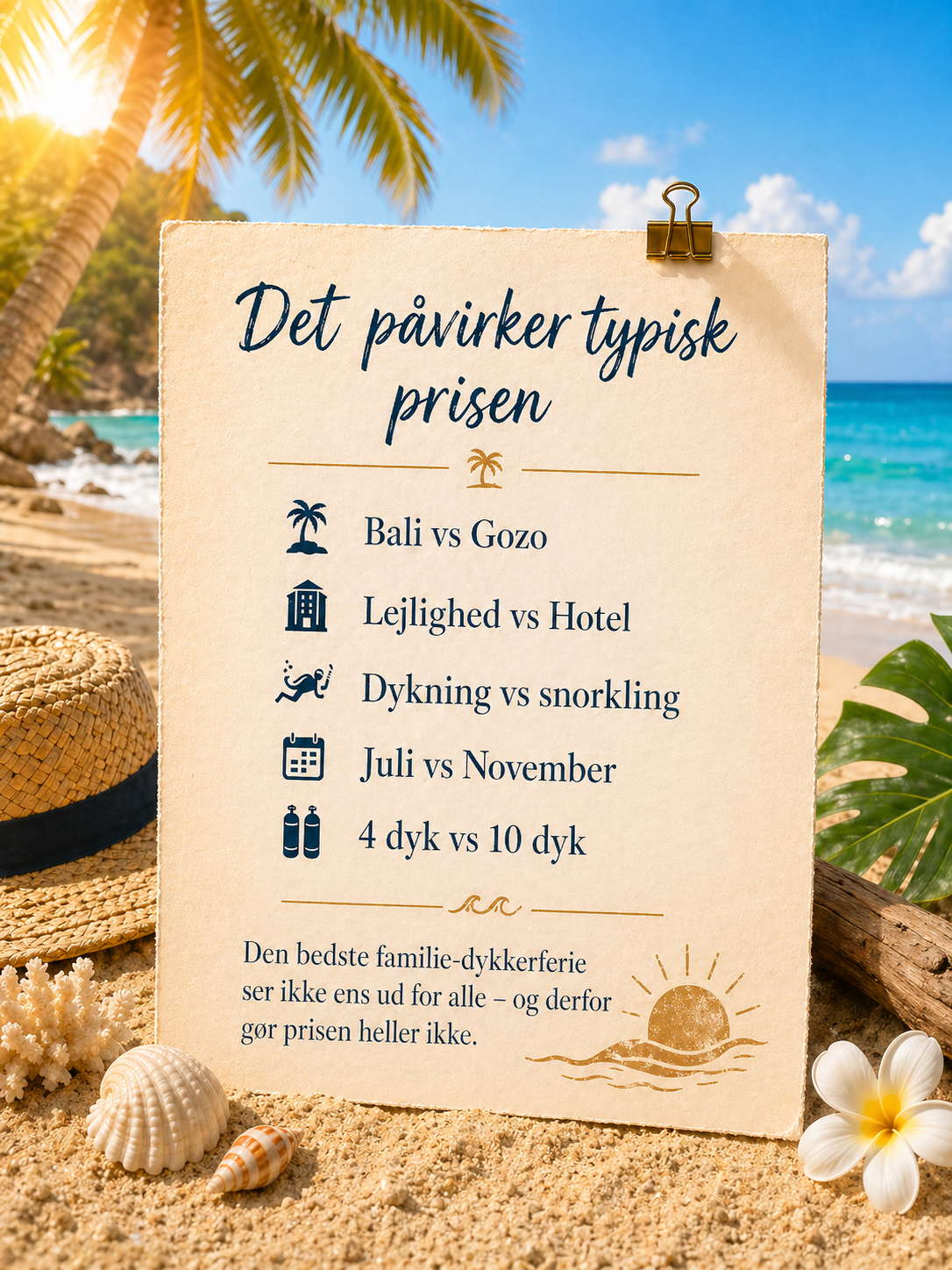
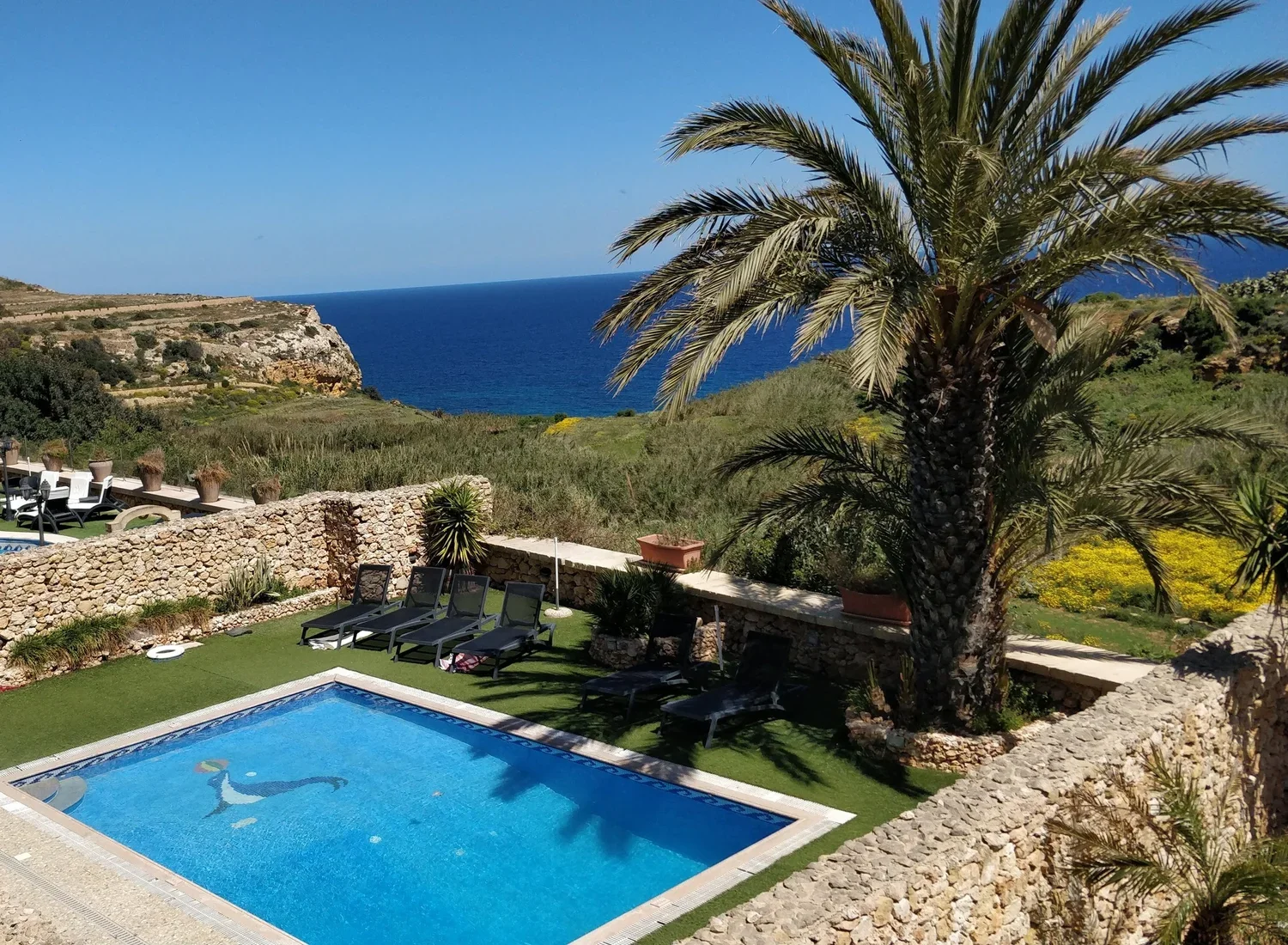
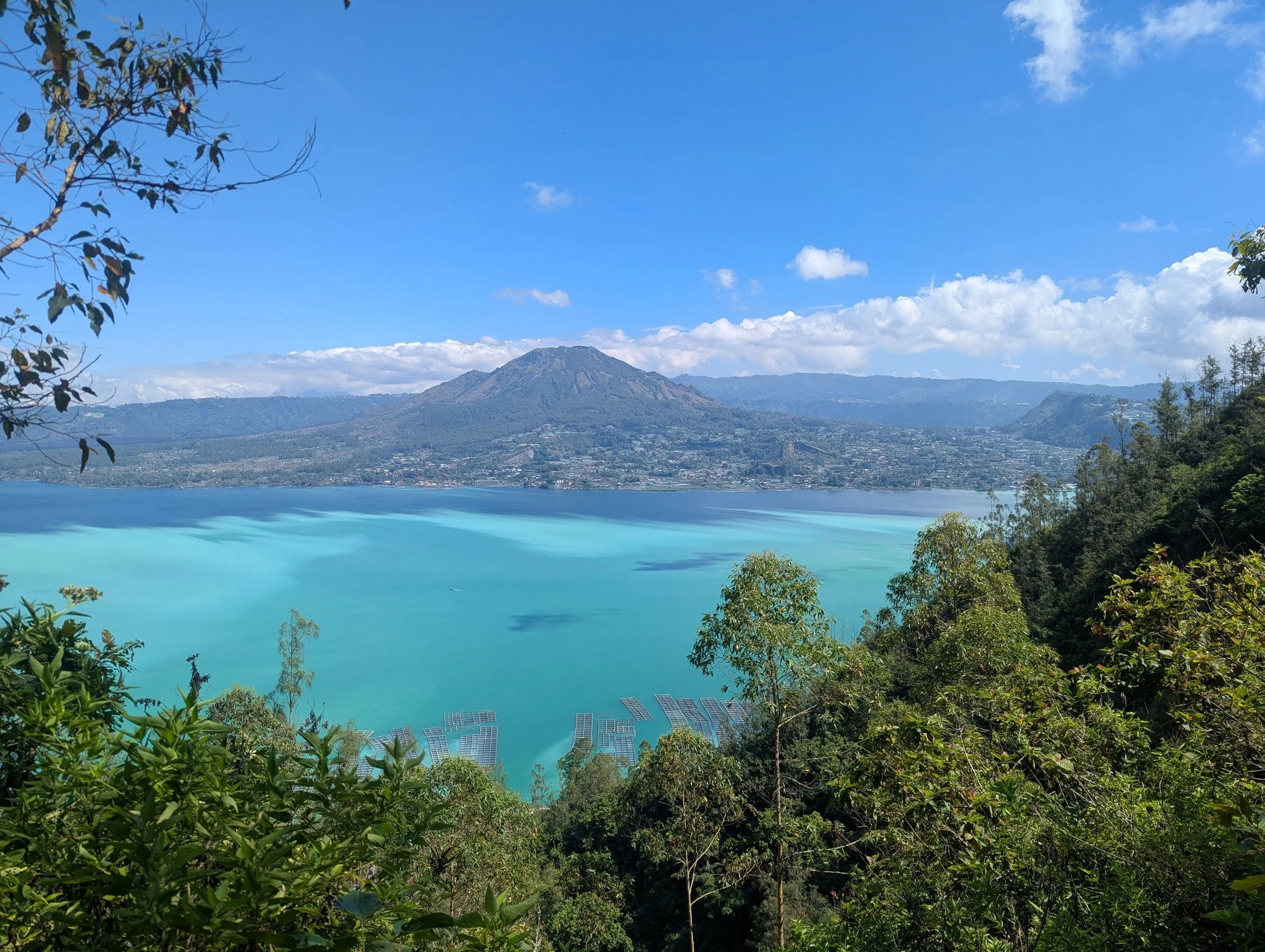
Mange vælger at kombinere barnets dykkerkursus med en hel familie-dykkerferie, hvor nogle snorkler, andre prøver dykning, og de mere erfarne tager certificering eller nyder det certifikat de allerede har. Det hele kan samles ét sted – fx på Gozo(Malta) eller på Bali, som begge er særligt velegnede til familier.
Read more about how diving brings the family together in our post: “When the sea brings you together”
Det er en ret fantastisk fornemmelse at dykke og tage certifikat - for alle, ung som gammel er det en exceptionel oplevelse - klik på billedet og læs vores Q&A om dykning.
A gentle start – and an opportunity to build on
For many children – and parents – it is important that the start of diving feels manageable and safe. When the theory has been learned at home through e-learning, children arrive with a basic understanding and peace of mind. They already know a little about the equipment, breathing, and the most important rules – and can therefore focus their energy on the experience itself when they get into the water.
The diving certificate itself is typically completed with four dives, where exercises and experiences go hand in hand. The dives are spread over 3–4 days, so there is plenty of time between each dive for breaks, conversation, and reflection. The pace is calm, and each dive is built up gradually—first with simple exercises, then with more focus on swimming freely and enjoying the surroundings.
This means that the children are not overwhelmed. They are allowed to settle into the experience, repeat what needs to be repeated, and ask questions along the way. At the same time, there is room for small victories: "I could do that today that I couldn't do yesterday."
For many families, it is precisely this structure that makes all the difference. The diving certificate is not an intensive course that must be completed, but a safe process where the child calmly grows with the task – and where the experience underwater is always the focus.
When can children obtain a diving certificate?
One of the questions we are most often asked when families are considering diving certification for children is: When are they actually old enough? It's a perfectly natural question – and the answer is rarely black and white.
When we talk about diving certificates for children, we are not referring to their first experience with diving, but rather when a child is ready for an actual course with theory, exercises, and certification.
Formally, children can start diving from the age of 8 through child-friendly introductory programs such as Bubblemaker or Try Scuba. Everything takes place in very shallow water, in a safe environment, with a focus on play, experience, and familiarity with the equipment. It is not a certificate, but a gentle and fun way to get to know the underwater world.
From the age of 10, children can take an actual Junior Open Water diving certificate. The teaching follows the same international standards as for adults, but is adapted to children's physical abilities, concentration, and learning style. The depths are lower, the exercises are adapted to the child's maturity, and there is extra focus on repetition, understanding, and breaks.
But age is only part of the picture. The most important thing is the child's desire, curiosity, and comfort in the water. Some children love water, snorkeling, and new experiences and are ready early on. Others need more time—and that's just as fine. Diving should never be something you push children into.
We often recommend starting with snorkeling or a trial dive to see how the child reacts. If the child is calm, happy, and curious underwater, that's a good sign. If the child is hesitant or unsure, it's perfectly okay to wait—diving isn't going anywhere.
Our experience – including with our own children – is that when children are motivated and allowed to learn at their own pace, obtaining a diving certificate becomes a safe and positive experience. Some children obtain their certificate at age 10, others at age 12 or 14. Both are perfectly normal.
Hvis I er i tvivl om, hvor I skal starte, anbefaler vi altid at begynde med en blid introduktion som prøvedyk for børn eller snorkling – og først derefter tage stilling til et egentligt dykkerkursus - tag en snak med os, vi kan hjælpe med hvad der er af muligheder og passer bedst for netop jeres familie - kontakt os her.

More than a certificate
A diving certificate for children is a great experience in itself – but what the children take home with them goes far beyond the certificate itself. It's about the calm they learn to find underwater. About trusting themselves, their equipment, and the people they dive with. And about the feeling of "I can do it, " which grows a little with each dive.
Many children return home with more than just new skills. They have gained the courage to try new experiences, learned to take responsibility, and felt the value of being part of a community. They have discovered that learning can be fun, sensory, and meaningful—and that it is not about being the fastest or the best, but about feeling safe and curious.
For you as a family, the diving certificate often becomes a shared point of reference. Something you talk about, laugh about, and build on. Perhaps it will be the start of more diving trips together. Perhaps it will "just" be a very special experience that you will always remember. Whatever it is, it will become part of your shared history.
And for many children, diving plants a seed. A respect for the sea and nature. An understanding of how beautiful and vulnerable the world beneath the surface is. A seed that can grow – or simply lie dormant, reminding them of a time when they experienced something truly special.
A diving certificate for children is therefore rarely just a goal in itself. It is a journey. An experience. And often the beginning of something that lasts long after the vacation is over.
“An experience. A safe start. A journey that lasts.”
If you have any questions about diving certificates for children, we would be happy to have a chat with you, with no obligation. Just get in touch :-)
Read more about our fantastic destinations Gozo (Malta) and Bali or explore our other inspiring articles about diving and family adventures here.